
AI-powered analytics: from weeks to minutes decision-making
The old cycle is broken
Until recently, a typical business intelligence cycle looked like this: data collected at month-end, cleaned and processed by the IT team over several days, transformed into a static report by the analytics team, reviewed in a committee meeting two weeks later, and acted upon — if at all — another week after that. By the time a decision was made, the data was 4 to 6 weeks old.
In fast-moving markets, that cycle is a competitive liability.
Deloitte's 2025 AI in the Enterprise report found that companies using AI-augmented analytics made major strategic decisions 4.3x faster than peers relying on traditional BI approaches — and those decisions were statistically more accurate.
What AI-powered analytics actually looks like
The shift is not simply about faster reports. It's about a fundamentally different relationship between data and decisions.
Natural language querying allows non-technical stakeholders to ask questions directly: "Show me which product lines underperformed in Q4 vs Q3, broken down by region" — and receive an instant, accurate visualization. No SQL, no waiting for an analyst to run a query.
Automated anomaly detection surfaces problems before humans notice them. A sudden drop in conversion rate in a specific customer segment, an inventory discrepancy building up across three warehouses, a margin erosion emerging in a product line — AI flags these in real time rather than at the next monthly review.
Predictive forecasting moves analytics from descriptive ("what happened") to prescriptive ("what should we do"). AI models trained on your historical data can simulate the probable outcomes of different decisions before you make them.
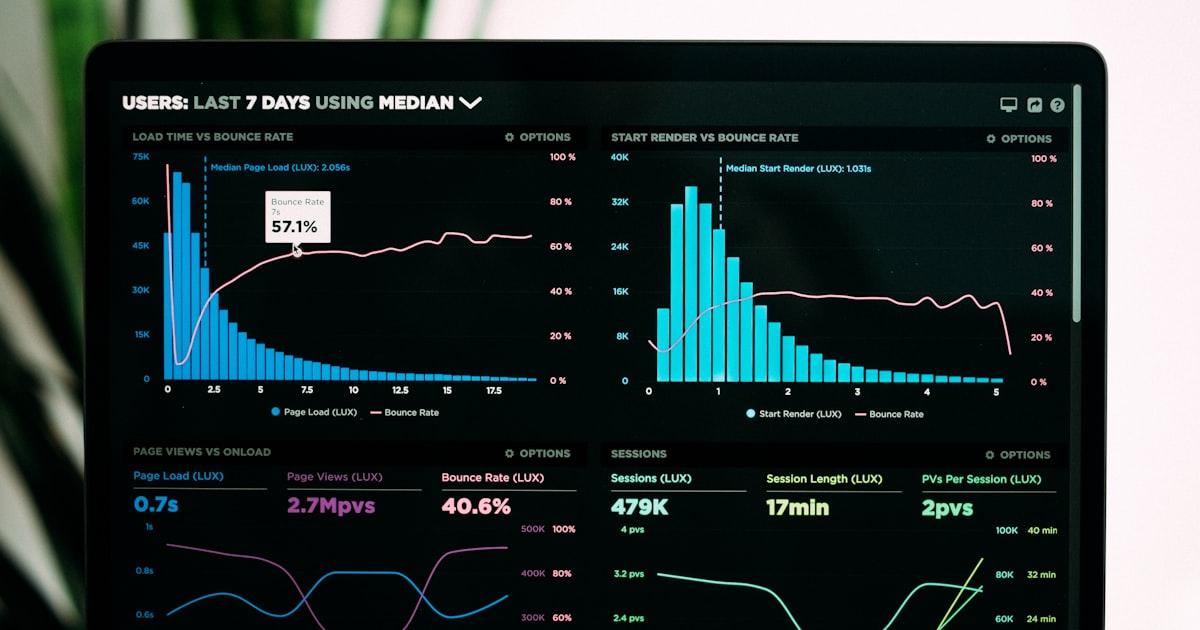
Continuous dashboards replace static monthly reports. Leadership teams see a live picture of business performance at any moment, with AI-generated commentary explaining variance from plan.
The platforms leading this shift
Several platforms have matured significantly in the last 12 months:
Microsoft Fabric + Copilot — Tight integration with the Microsoft 365 ecosystem makes this the default choice for companies already on Azure. Copilot translates natural language questions into DAX queries and generates narrative summaries of Power BI dashboards.
Databricks + DBRX — Best for organizations with large, complex data architectures. The AI/BI feature set now includes automated insight generation and anomaly narration.
Tableau Pulse — Salesforce's AI layer on Tableau delivers proactive insights via Slack and email, pushing analysis to decision-makers rather than requiring them to pull reports.
ThoughtSpot — Purpose-built for natural language analytics, with strong enterprise security and governance controls relevant for regulated industries like Luxembourg's financial sector.
The human layer still matters
Faster analytics creates a new risk: the illusion of certainty. An AI-generated insight presented with confidence can lead to overconfident decisions if users don't understand the model's assumptions and limitations.
The organizations getting the most value from AI analytics have invested equally in data literacy — training decision-makers to ask better questions of the data, to understand confidence intervals, and to recognize when the model needs more context.
The formula for success is not: AI replaces analysts. It is: AI handles the mechanical analysis so analysts can focus on interpretation, context, and strategic recommendation.
ROI is measurable and fast
Deloitte benchmarks show that companies implementing AI analytics platforms see:
- 60-70% reduction in time spent on routine reporting
- 25-35% improvement in forecast accuracy within 6 months
- 15-20% reduction in inventory and resource allocation waste
- Decision cycle times reduced from weeks to hours for operational decisions
Practical takeaway: Start with one high-frequency decision in your organization — weekly inventory reorder, monthly budget reallocation, or daily sales performance review. Map the current data-to-decision cycle time. Then identify which step in that cycle consumes the most time without adding interpretive value. That is where AI analytics delivers its first and fastest ROI. Pilot one tool for 60 days, measure the cycle time reduction, and build your business case from real numbers.
Vous voulez implémenter ça dans votre entreprise ?
Nos experts vous accompagnent de la stratégie au déploiement.
Parlez à un expertConsultation gratuite · 30 min · Sans engagement