Britannica sues OpenAI: the copyright battle heats up
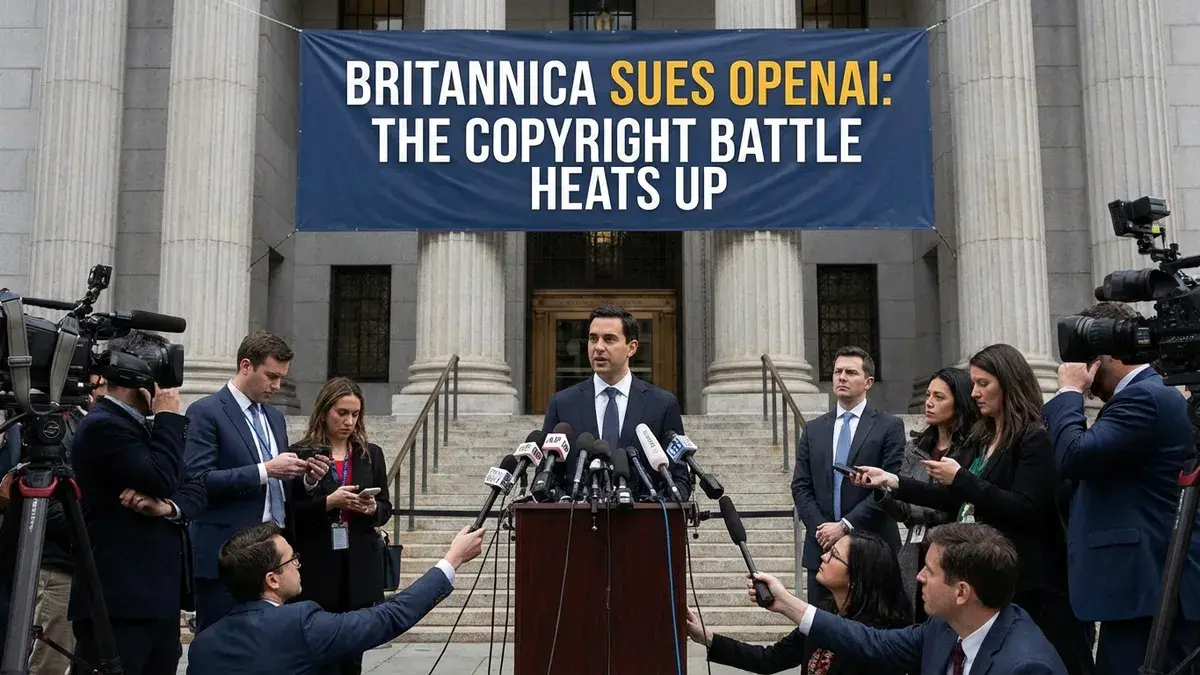
Britannica sues OpenAI: the copyright battle heats up
The legal front in the AI copyright wars just got more crowded. Encyclopaedia Britannica, one of the world's most recognizable knowledge brands, has filed a copyright infringement lawsuit against OpenAI, alleging that its carefully curated encyclopedic content was used to train large language models without authorization or compensation.
What the lawsuit claims
According to the complaint, Britannica argues that OpenAI scraped and ingested its proprietary content — decades of expert-written, editorially vetted encyclopedia articles — as part of the training data for GPT models. The company contends this constitutes direct copyright infringement and seeks both injunctive relief and damages.
Britannica's case joins a growing list of high-profile copyright actions against AI developers, including lawsuits from the New York Times, Getty Images, and a coalition of authors represented by the Authors Guild.
Why this one matters
Britannica is a particularly interesting plaintiff for several reasons.
First, its content is deeply authoritative and structured. Unlike news articles or social media posts, encyclopedia entries are designed to be comprehensive, neutral, and factually dense — exactly the kind of material that would be highly valuable for training a knowledge-retrieval model.
Second, Britannica has itself been navigating the digital transition for decades. Having survived the encyclopedia market collapse of the 1990s (triggered by Microsoft Encarta and later Wikipedia), the company pivoted aggressively to digital and educational products. It understands technology disruption intimately, which gives its legal challenge a certain credibility.
Third, the case tests the "fair use" doctrine that has been OpenAI's primary legal defense. OpenAI argues that training AI models on public internet content constitutes transformative fair use. Courts are still working through this question, and the Britannica case may provide important new precedents.
The broader legal landscape
The AI copyright question is genuinely unsettled. Courts in the US and EU are processing multiple conflicting arguments:
- For AI companies: Training is transformative, the output is original, no specific protected expression is reproduced verbatim at scale.
- For rights holders: The value extracted from their content is enormous, no licensing fee was paid, and the AI effectively competes with the original source.
The EU's AI Act includes provisions about transparency in training data, which may accelerate licensing negotiations in Europe regardless of how US courts rule.
What this means for enterprises using AI
If courts increasingly find in favor of rights holders, the cost of training frontier AI models could rise substantially. This would likely:
- Consolidate the market further around a few well-capitalized players who can afford licensing at scale
- Accelerate the shift toward licensed training data partnerships between AI companies and publishers
- Create compliance questions for enterprises building custom AI models on third-party content
For businesses in Luxembourg and across Europe deploying AI solutions, this is a reminder that the legal infrastructure around AI is still being built — and that working with established, compliant AI providers matters.
The human angle
There's something poignant about Britannica's position here. The company was once the gold standard of human knowledge — door-to-door salespeople sold multi-volume sets as household treasures. The internet nearly killed it. Now, it's fighting for recognition that its intellectual contributions matter even in the age of AI.
Whether or not the lawsuit succeeds, it represents a broader reckoning: the people and organizations that created the content that trained the world's AI systems want to be part of the value equation.
Business takeaway
The copyright battle over AI training data is accelerating. For enterprise AI users, the key implication is this: vet your AI vendors' compliance posture carefully, and prefer platforms that have established licensing relationships with content providers. The legal landscape will keep shifting — stay informed.
IALUX helps Luxembourg businesses navigate AI adoption with a full view of the regulatory and legal context. Talk to us about building AI strategies that are both effective and compliant.
Vous voulez implémenter ça dans votre entreprise ?
Nos experts vous accompagnent de la stratégie au déploiement.
Parlez à un expertConsultation gratuite · 30 min · Sans engagement