CES 2026: NVIDIA's Vera Rubin Platform Redefines AI Computing
CES 2026: NVIDIA's Vera Rubin Platform Redefines AI Computing
CES 2026 in Las Vegas delivered its biggest AI announcement yet: NVIDIA's Vera Rubin platform, the successor to the Blackwell architecture. Named after the astronomer who provided key evidence for dark matter, Vera Rubin marks a new era in enterprise AI infrastructure—and its implications stretch well beyond data centers.
What Is the Vera Rubin Platform?
The Vera Rubin GPU architecture is NVIDIA's answer to the exploding demand for AI training and inference workloads. Key specifications include:
- 3x more compute density than the Blackwell B200
- NVLink 6 interconnect, enabling massive multi-GPU clusters with lower latency
- Built-in support for mixture-of-experts (MoE) models, the architecture powering the most capable LLMs today
- Native integration with NVIDIA's GB300 Grace CPU, forming a unified CPU-GPU superchip
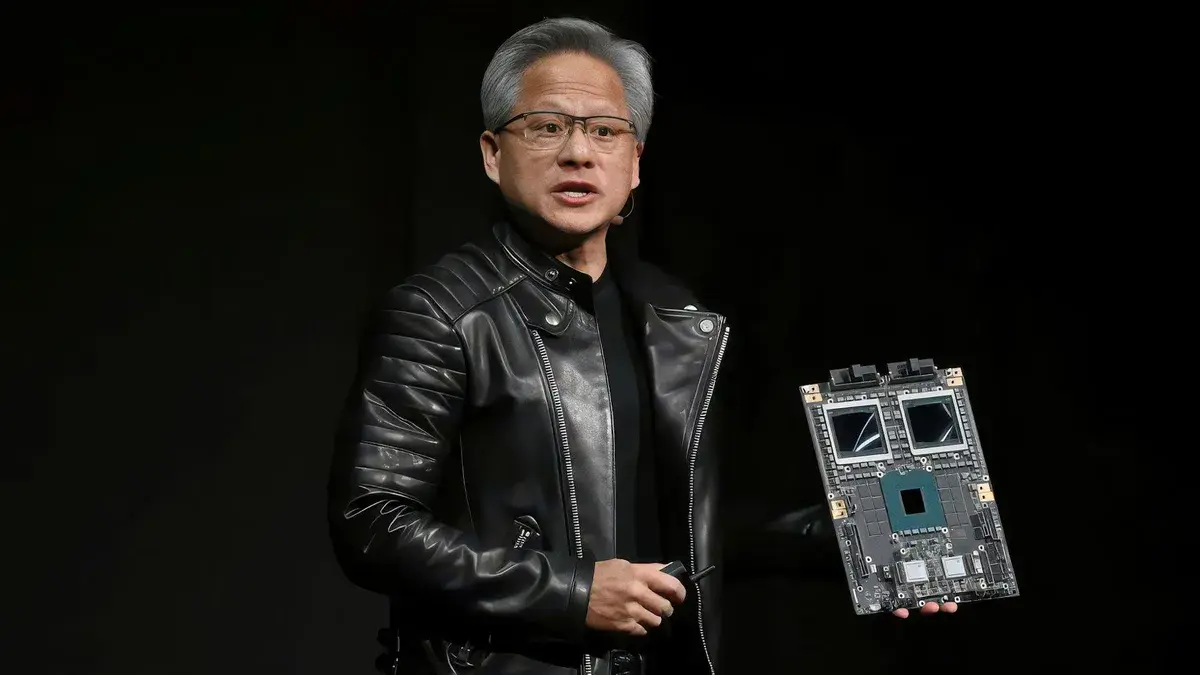
Jensen Huang unveiled the platform during his keynote, demonstrating real-time reasoning models running entirely on-device in data centers—no cloud latency required.
Why This Matters Beyond the Lab
For most businesses, the Vera Rubin announcement feels distant. But its ripple effects will be felt within 12 to 18 months:
Cheaper inference costs. As NVIDIA ships more Vera Rubin units to hyperscalers (AWS, Azure, Google), the cost per AI API call drops. That means the AI tools your business uses today—chatbots, document processing, analytics—will become significantly cheaper to run.
More capable local models. Vera Rubin's architecture accelerates the shift toward models that run inside enterprise networks, not in the cloud. For industries handling sensitive data—finance, healthcare, legal—this is a game changer for compliance.
Faster agentic AI. The low-latency NVLink 6 fabric makes it feasible to run chains of AI agents in real time. This directly enables the agentic automation workflows that analysts have been predicting for 2026.
The Competitive Landscape
AMD, Intel, and a wave of startups (Groq, Cerebras, Tenstorrent) are all competing for a share of the AI chip market. But NVIDIA's CUDA ecosystem remains the default for enterprise AI deployment. Vera Rubin reinforces that moat significantly.
Google's TPU v6 and Amazon's Trainium 2 chips are the most credible alternatives for hyperscale training—but NVIDIA continues to dominate the inference market that enterprise software depends on.
What It Means for Your Business
You do not need to buy a Vera Rubin chip. What you do need is to understand that the underlying infrastructure powering AI tools is advancing at a pace that creates genuine competitive windows.
Companies that build AI-enabled workflows today will benefit from exponentially cheaper and faster AI services over the next two years. Those that wait will find themselves catching up against competitors who have already embedded AI into operations.
At IALUX, we help Luxembourg businesses identify which AI capabilities are relevant now—and which ones to prepare for as infrastructure like Vera Rubin comes online.
Vous voulez implémenter ça dans votre entreprise ?
Nos experts vous accompagnent de la stratégie au déploiement.
Parlez à un expertConsultation gratuite · 30 min · Sans engagement