
Apple Vision Pro Exec Joins OpenAI Hardware Team
When Talent Migration Tells You More Than Press Releases
Executive movements between tech giants rarely happen in a vacuum. When a senior vice president responsible for one of the most ambitious — and commercially challenging — hardware projects in Silicon Valley opts to join a software-first AI lab, it signals something substantive about where the industry believes value will be created next.
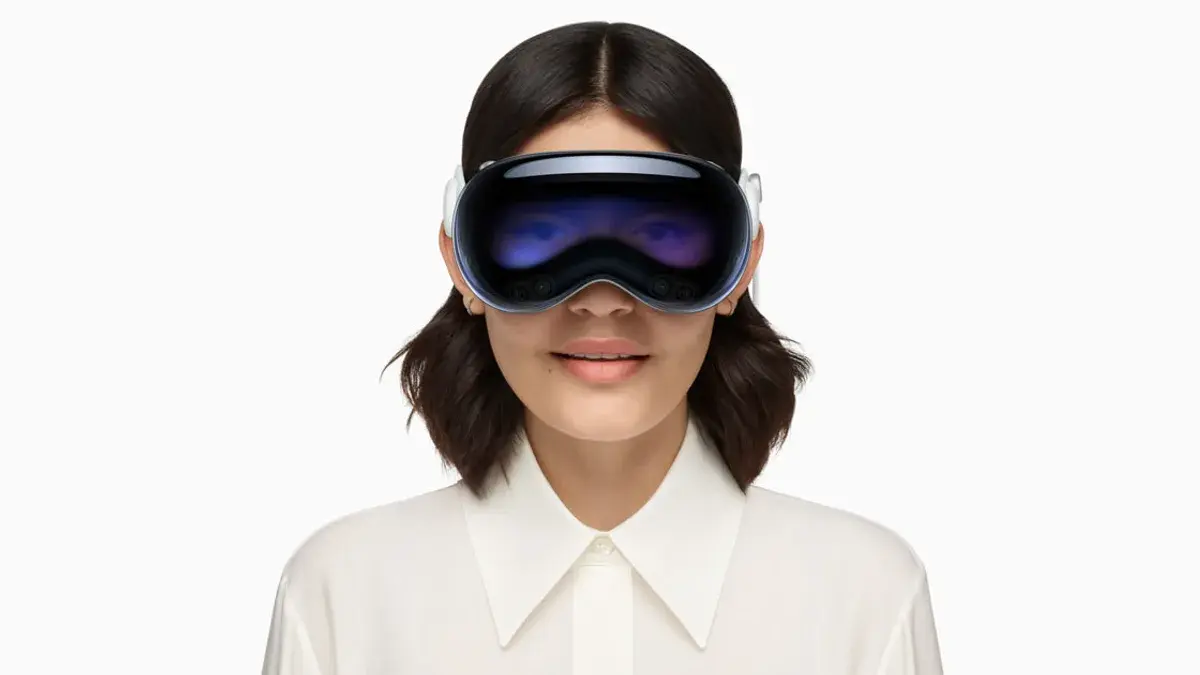
Paul Meade, the Apple VP who oversaw Vision Pro development, is reportedly heading to OpenAI's hardware division. The move is worth examining not for the gossip, but for what it implies about the strategic trajectory of both companies and the broader AI hardware landscape.
Reading the Signal: What This Transition Actually Means
OpenAI Is Serious About Physical Products
OpenAI has been deliberate in its recent hiring. The organisation already brought on Jony Ive — Apple's former chief design officer — to lead a hardware initiative. Adding an executive with direct experience shipping a complex mixed-reality platform reinforces that this is not a peripheral experiment. Building AI-native hardware requires a fundamentally different skill set than training models or deploying APIs, and OpenAI appears to be assembling that capability systematically.
The key question is what kind of device OpenAI is targeting. Spatial computing headsets require enormous investment in optics, sensors, and form factor engineering. A more plausible near-term direction might be an ambient AI companion device — something that integrates conversational AI into a physical form without the weight (literal and figurative) of a full headset. Meade's background in managing complex hardware programmes at Apple would translate to either scenario.
Apple's Position Becomes More Interesting
Vision Pro has faced well-documented commercial headwinds. At its current price point and use case maturity, it remains a developer and enterprise platform rather than a mass-market product. Losing a senior leader does not necessarily indicate product cancellation — Apple's bench is deep — but it does suggest internal recalibration may be underway.
For the broader market, this raises a legitimate strategic question: is the future of spatial computing driven by specialised operating systems layered over proprietary hardware (Apple's model), or by AI models that can run across multiple form factors, including future hardware built around conversational interfaces? OpenAI's apparent bet is the latter.
The Convergence of AI and Hardware Is Accelerating
For years, AI progress was measured in model benchmarks and API capabilities. The next competitive dimension is physical: which AI systems can embed themselves meaningfully into the physical environment through purpose-built hardware. This is not science fiction — it is the logic behind investments in wearables, ambient devices, and robotics that multiple labs and tech companies are pursuing simultaneously.
This convergence has direct implications for enterprise technology procurement. Organisations evaluating AI tooling today may be making decisions that lock them into specific hardware ecosystems within three to five years.
Impact for Luxembourg Enterprises
For technology decision-makers in Luxembourg, this particular talent move is less a headline and more a market signal worth integrating into planning cycles.
AI vendor diversification risk: Enterprises currently building workflows around OpenAI's API infrastructure should monitor how that company's hardware ambitions might affect pricing, platform stability, and data governance terms over time. An OpenAI that sells its own devices operates under different commercial incentives than a pure-play API provider.
European regulatory context: Any AI-native hardware entering the European market will need to navigate the EU AI Act's requirements around transparency, data processing, and conformity assessments. Luxembourg businesses adopting such devices early should ensure their IT and legal teams are aligned on compliance obligations — particularly for devices that may handle sensitive business communications.
Procurement timelines: If OpenAI does bring a consumer or enterprise device to market within the next two to three years, it will likely trigger a wave of evaluation requests from business units. IT leaders in Luxembourg who establish clear AI hardware evaluation frameworks now will be better positioned than those responding reactively.
Skills and integration planning: Hardware that embeds AI natively into workflows requires different integration expertise than SaaS tooling. Whether it is spatial computing for design and engineering teams or ambient AI for executive productivity, the integration complexity should not be underestimated.
Conclusion
Paul Meade's reported move is a data point in a larger pattern: the AI industry is moving from purely digital deployments toward physical form factors, and the companies best positioned to win that transition are assembling the right talent now.
For European enterprises, the practical implication is not to speculate about which device will dominate — it is to build AI governance frameworks flexible enough to accommodate hardware-embedded AI as it matures.
At IALUX, we help Luxembourg businesses navigate exactly this kind of strategic uncertainty — evaluating AI tooling with both operational and regulatory lenses before committing to platforms that may look very different in three years. If your organisation is building an AI roadmap and wants a grounded assessment of vendor trajectories and integration risks, we would be glad to explore that with you.
Vous voulez implémenter ça dans votre entreprise ?
Nos experts vous accompagnent de la stratégie au déploiement.
Parlez à un expertConsultation gratuite · 30 min · Sans engagement